
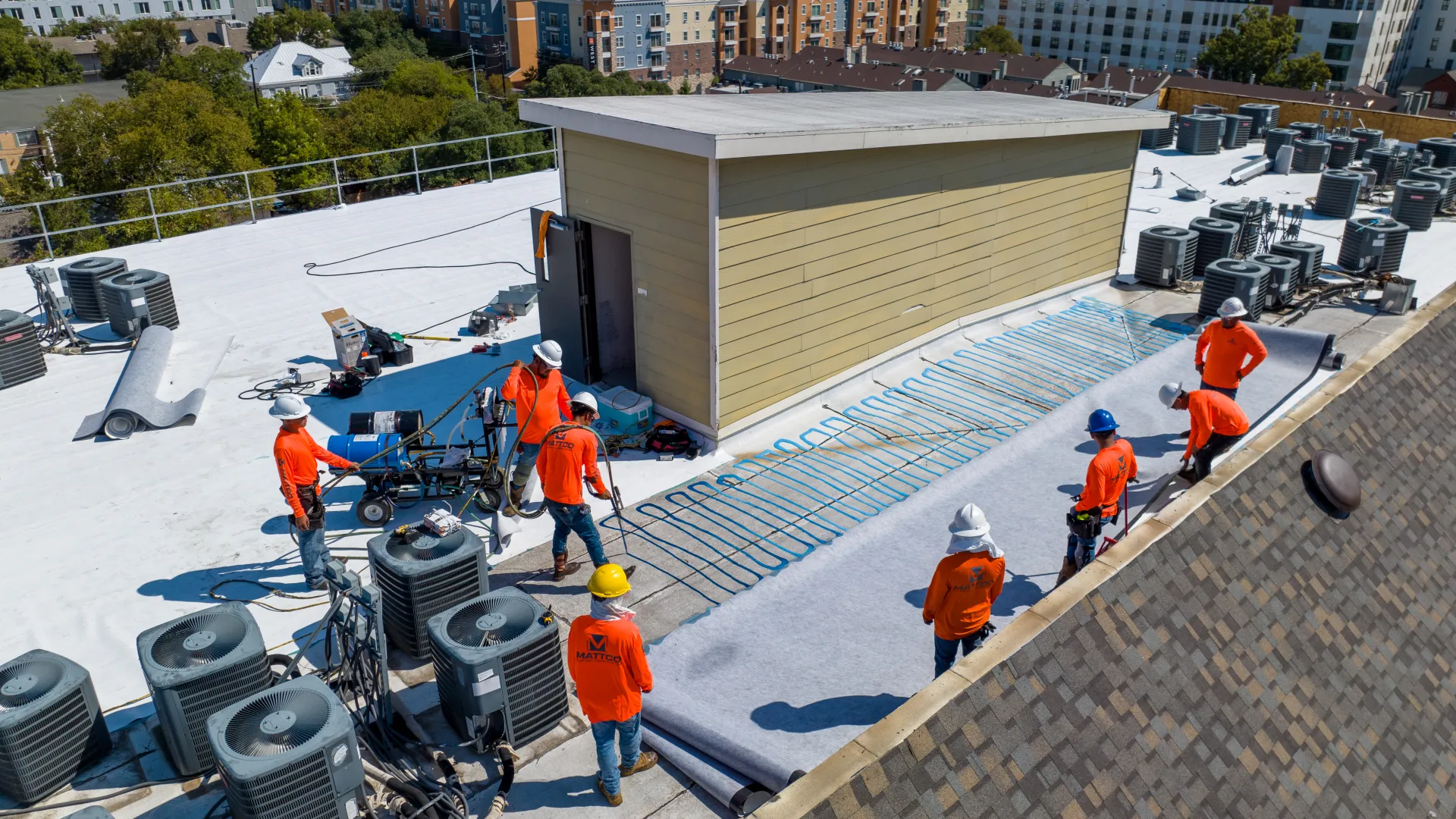
Commercial Roofing System Types Installed Across Texas
Low Slope vs. Steep Slope Roofing: Which System is Right for Your Commercial Property?
Choosing the right roofing system for your commercial property starts with understanding the fundamental difference between low slope and steep slope systems. Most commercial buildings in Texas, including warehouses, office buildings, retail centers, multi-family complexes, and student housing, use low slope systems. Steep slope systems are more common on institutional buildings, churches, and commercial properties requiring a traditional architectural appearance.
At Mattco Roofing and Construction, we install both low slope and steep slope systems across College Station, Bryan, Houston, and Austin. Our certified installer status with 13 leading manufacturers means we can recommend the right system for your building, your budget, and your long-term capital plan.
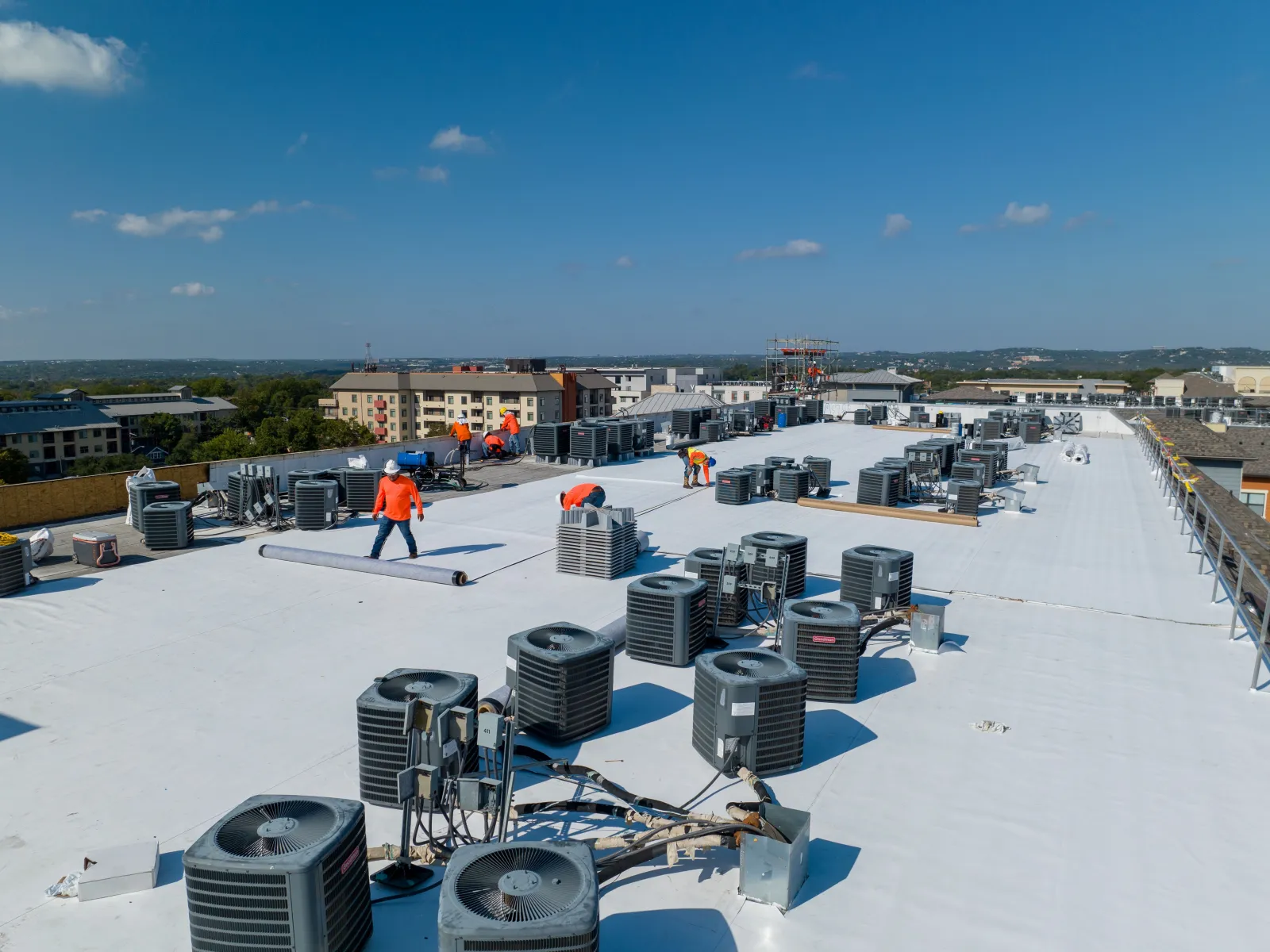
Low Slope Roof Systems
When envisioning a low slope roof, one might picture a
surface that appears nearly level. In reality, low slope roofs are designed
with a slight incline to facilitate water drainage. This roofing style has
gained popularity, especially in urban settings, due to its sleek and modern
aesthetic. But what truly makes a low slope roof an appealing choice, and when
might it be the perfect fit for your commercial property?
Advantages of Low Slope Roofs
Maximized Space Utilization: One of the most compelling
advantages of low slope roofs is their ability to provide additional usable
space. This area can be transformed into a rooftop garden, an outdoor lounge,
or a convenient location for HVAC units, all while maintaining the aesthetics
and functionality of the building.
Cost-Effectiveness and Ease of Installation: Generally, low
slope roofs are less expensive to install than their steep sloped counterparts.
Their simpler structure requires fewer materials and can be constructed more
quickly, leading to reduced labor costs. Additionally, the ease of access makes
maintenance tasks, such as gutter cleaning and roof inspections, simpler and
safer.
Disadvantages of Low Slope Roofs
Water Drainage Challenges: The most significant challenge
with low slope roofs is water drainage. Unlike steep sloped roofs, which
naturally guide water and debris to the ground, low slope roofs can allow water
to pool if not properly designed or maintained. This can lead to leakage and
increased wear and tear over time.
Limited Material Options: Low slope roofs typically require
specific types of materials that differ from those used in steep sloped roofs.
These materials need to be more resistant to water pooling, which can limit
options in terms of aesthetics and cost.
Ideal Scenarios for Choosing a Low Slope Roof
Low slope roofs are particularly suitable for commercial
buildings due to their space-efficient design and cost-effectiveness. In urban
environments, where space is at a premium, a low slope roof can provide that
extra area for various functionalities or leisure activities.
Mattco installs all major low slope roofing systems across College Station, Bryan, Houston, and Austin. We work with building owners and property managers to select the right membrane, insulation, and drainage system for each property based on roof size, existing substrate, local climate conditions, and warranty requirements.
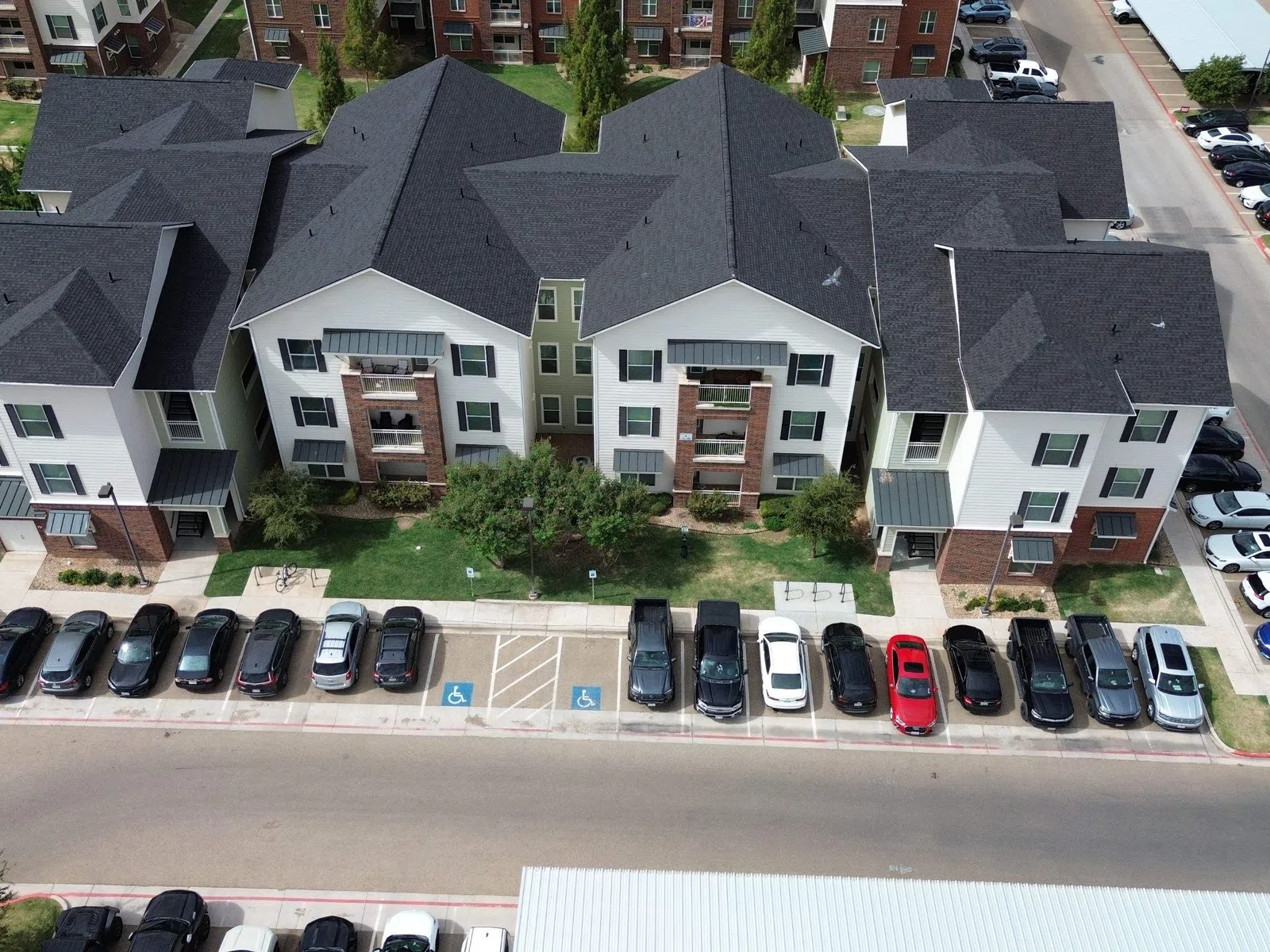
Steep Slope Roof Systems
A steep slope roof is defined by a pitch that rises more than four inches for every twelve inches of horizontal run. Where low slope roofs rely on membranes and careful drainage design, steep slope roofs use gravity to their advantage, shedding water and debris quickly and naturally. This roofing style is often chosen for its traditional architectural appearance and long service life. But what makes a steep slope roof the right choice, and when does it fit a commercial property?
Advantages of Steep Slope Roofs
Superior Water and Debris Shedding: The most significant advantage of a steep slope roof is drainage. The pitch guides water, snow, and debris toward the ground quickly and naturally, dramatically reducing the risk of pooling, leaks, and the water-related wear that low slope roofs must be engineered against. This makes them exceptionally reliable in wet climates and heavy rain events.
Longevity and Durability: Steep slope systems, particularly standing seam metal and tile, are among the longest-lasting roofing options available. A properly installed metal roof can last 40 to 70 years, and tile can last even longer, often outlasting the building's other major systems. That lifespan makes steep slope a strong choice for owners focused on long-term capital planning.
Architectural Appeal: Steep slope roofs deliver a traditional, finished appearance that many institutional and commercial buildings require. Churches, schools, municipal buildings, and commercial properties designed for a specific aesthetic often depend on steep slope systems to achieve their intended look.
Disadvantages of Steep Slope Roofs
Higher Installation Cost and Complexity: Steep slope roofs generally cost more to install than low slope systems. The pitch requires more materials, more labor, additional safety measures for crews working at height, and greater structural support to carry the weight of materials like tile or slate. This drives up both material and labor costs.
Limited Usable Roof Space: Unlike low slope roofs, which can host HVAC equipment, rooftop lounges, or gardens, a steep slope roof offers no practical usable surface. For commercial buildings that rely on rooftop mechanical space, this is a meaningful tradeoff.
Access and Maintenance Challenges: While steep slope roofs shed debris well and need less drainage-related maintenance, the pitch itself makes any inspection or repair more difficult and hazardous. Work at height requires specialized safety equipment and experienced crews, which can raise the cost of even minor service.
Ideal Scenarios for Choosing a Steep Slope Roof
Steep slope roofs are particularly well suited to institutional and architectural buildings such as churches, schools, municipal facilities, and multi-family or student housing communities designed for a residential appearance. They are also an excellent long-term choice for owners who prioritize durability and lifespan over rooftop usability, and for properties in areas with heavy rainfall where fast, natural drainage is a priority.
Mattco installs all major steep slope roofing systems across College Station, Bryan, Houston, and Austin. We work with building owners and property managers to select the right system, underlayment, and detailing for each property based on pitch, structural capacity, architectural requirements, and long-term performance goals.
Types of Flat Roof Systems
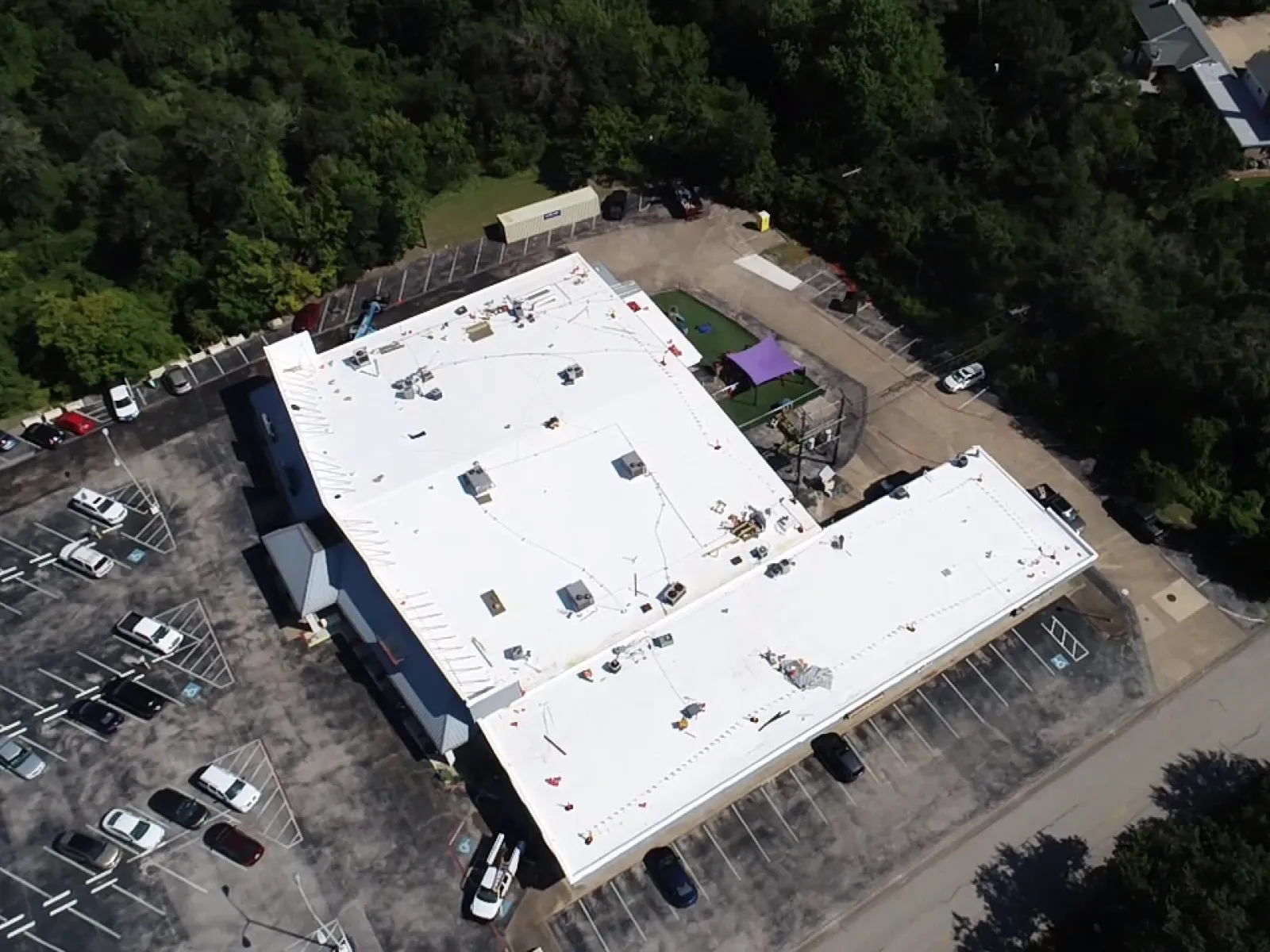
TPO
(Thermoplastic Olefin)
TPO is a single-ply roofing membrane known for its heat-reflective properties and energy efficiency. It is a popular choice for commercial low slope roofs.
- Materials Used: TPO roofing is made from a blend of polypropylene and ethylene-propylene rubber. It is known for its heat-reflective properties and resistance to UV radiation.
- Installation: TPO membranes are installed in large rolls and typically secured with mechanical fasteners or adhesive. The seams are welded together using hot air.
- Benefits: TPO roofs offer excellent energy efficiency due to their reflective properties, which can reduce cooling costs. They are also resistant to UV rays, chemicals, and punctures.
- Considerations: TPO roofs may be more expensive compared to other options, and their performance can vary based on the quality of the material and installation.
Modified Bitumen
(MOD BIT)
MOD BIT is an asphalt-based roofing system reinforced with polyester or fiberglass and modified with SBS or APP polymers for improved flexibility and durability. It evolved from built-up roofing and has been widely used in commercial construction for over 50 years.
- Materials Used: Modified bitumen membranes are made from asphalt blended with polymerized rubber or plastic and reinforced with fiberglass or polyester fabric. The two main types are SBS (Styrene-Butadiene-Styrene), which remains flexible in cold temperatures, and APP (Atactic Polypropylene), which provides excellent UV resistance and heat tolerance.
- Installation: Modified bitumen is installed in multiple layers, typically a two-ply system. Installation methods include torch-applied, where an open flame heats and bonds the membrane; cold-applied, using adhesive; and self-adhered peel-and-stick systems. Torch application by experienced professionals produces the most durable result.
- Benefits: Modified bitumen offers exceptional thickness and waterproofing redundancy. A standard two-ply system provides 240 mils of membrane thickness compared to 60 mils for a single-ply system. It performs well on roofs with high foot traffic, handles temperature swings without cracking, and is straightforward to repair.
- Considerations: Dark-colored mod bit membranes absorb heat, which can increase cooling costs in Texas summers. Torch application requires experienced contractors and proper fire safety protocols. Lifespan typically ranges from 15 to 25 years depending on installation quality and maintenance.
EPDM
(Ethylene Propylene Diene Monomer)
EPDM is a synthetic rubber roofing membrane with one of the longest proven performance records in commercial roofing, having been used on flat and low-slope roofs for over 60 years.
- Materials Used: EPDM is formulated primarily from ethylene and propylene derived from natural gas, with diene added for flexibility and UV resistance. It is available in black or white membranes in thicknesses ranging from 45 mil to 90 mil. Wider sheet widths up to 50 feet reduce the number of seams on large commercial roofs.
- Installation: EPDM can be installed using three methods: fully adhered with bonding adhesive, mechanically fastened with plates and fasteners, or ballasted with stone. Large sheet sizes mean fewer seams compared to other systems, reducing potential leak points. Seams are sealed with liquid adhesive or seam tape.
- Benefits: EPDM offers outstanding durability, with properly maintained systems lasting 30 to 50 years. It is resistant to UV radiation, ozone, extreme temperature swings, and hail impact. White EPDM membranes reflect heat and reduce cooling costs, making them well suited for commercial properties in Texas. EPDM is also recyclable and contains no chlorine.
- Considerations: Black EPDM absorbs heat rather than reflecting it, which is a real factor in Texas climates where cooling costs already run high. Adhesive-based seams degrade over time and are more vulnerable to wind-driven rain compared to heat-welded seams used in TPO and PVC systems. Seam quality and installation method are critical to long-term performance.
PVC
(Polyvinyl Chloride)
PVC is a single-ply thermoplastic roofing membrane that has been used on commercial buildings since the 1960s. It is particularly well suited to industrial and food service facilities due to its outstanding chemical resistance.
- Materials Used: PVC membranes consist of two layers of polyvinyl chloride reinforced with a polyester scrim between the layers. Plasticizers are added for flexibility and UV stabilizers are incorporated to prevent degradation from sun exposure. Most PVC membranes are white or light colored, providing natural heat reflectivity.
- Installation: PVC membranes are installed in large rolls and can be mechanically fastened, fully adhered, or installed with fleece-backed products. Seams are heat-welded using hot air, creating a continuous watertight bond that is stronger and more durable than adhesive-based seam systems. This makes PVC one of the most reliable systems for seam performance.
- Benefits: PVC offers excellent chemical resistance, making it the preferred choice for restaurants, commercial kitchens, industrial facilities, and any building where grease, oils, or chemical exhaust contacts the roof surface. It is fire resistant, highly reflective for energy efficiency, and delivers a lifespan of 20 to 30 years with proper maintenance. Heat-welded seams provide superior wind uplift resistance.
- Considerations: PVC has a higher upfront cost compared to TPO and EPDM. In extreme cold climates the membrane can become less flexible, though this is less of a concern in Texas. PVC contains chlorine and some environmental programs favor TPO or EPDM for sustainability goals. Plasticizers in older PVC membranes can migrate out over time, which is why modern formulations have improved significantly.
Types of Steep Roof Systems
Architectural Shingle
(Asphalt Composition)
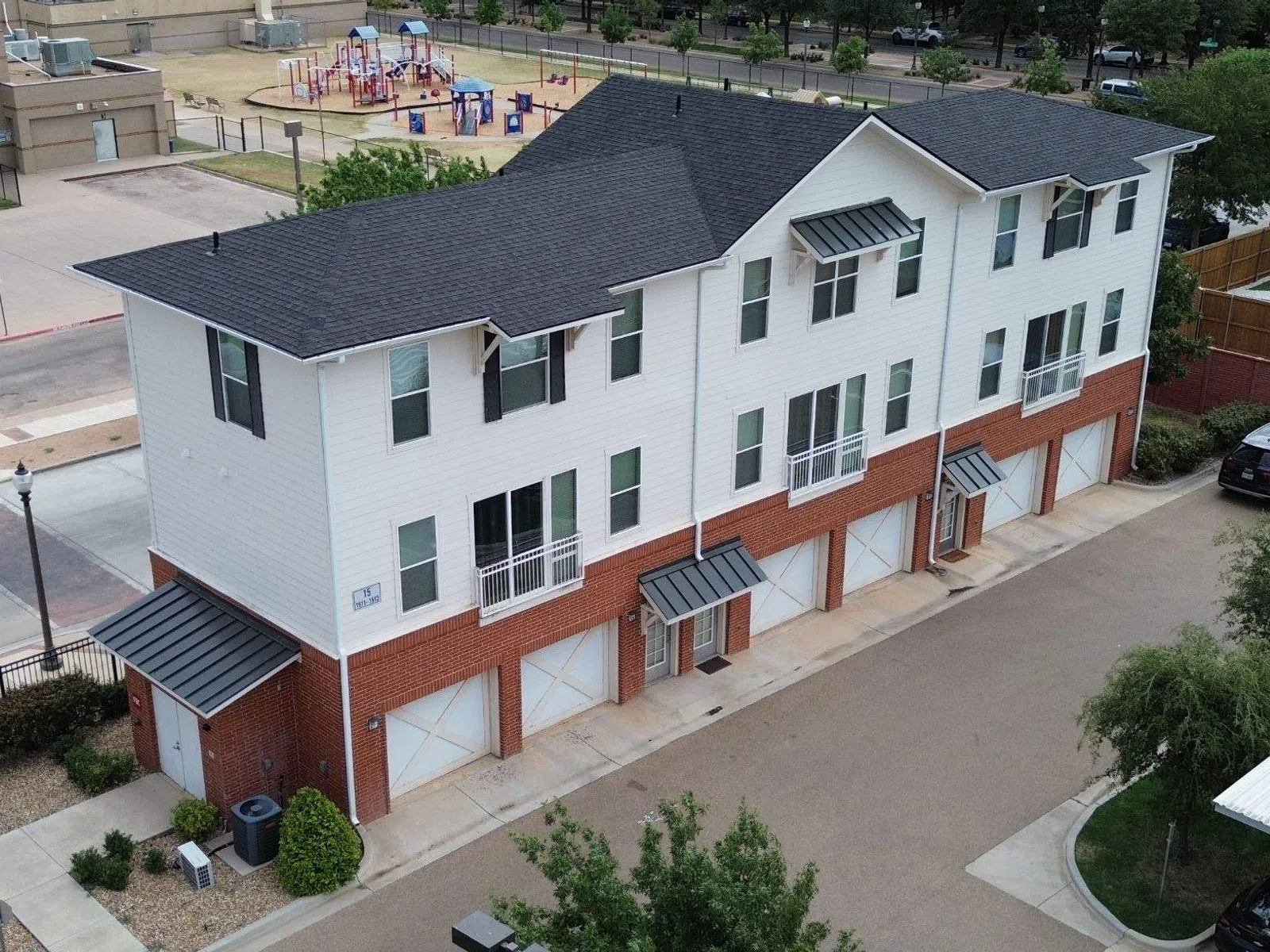
Architectural shingles, also called dimensional or laminate shingles, are the most widely used steep slope roofing material in North America. They offer a balance of affordability, durability, and appearance that suits a wide range of commercial and multi-family properties.
- Materials Used: Architectural shingles are built on a fiberglass mat coated with asphalt and surfaced with ceramic-coated mineral granules. Multiple layers are laminated together to create depth and a dimensional appearance, and the granules provide UV protection and fire resistance.
- Installation: Shingles are installed in overlapping courses from the eave upward, fastened with roofing nails over an underlayment and ice-and-water barrier. Proper flashing at valleys, penetrations, and edges is critical to long-term performance. A quality installation includes a balanced ventilation system to manage attic heat and moisture.
- Benefits: Architectural shingles offer an excellent balance of cost and performance. They install quickly, suit nearly any building style, and modern versions carry wind ratings up to 130 mph. Lifespans typically range from 25 to 30 years, and repairs are simple and inexpensive compared to other steep slope systems.
- Considerations: Asphalt shingles have a shorter lifespan than metal or tile and are more vulnerable to hail and high-wind damage. Dark shingles absorb heat, which is a real factor in Texas summers. Quality varies widely by product line, so material grade and installation matter significantly to how long the roof lasts.
Standing Seam Metal
(Concealed Fastener Metal)
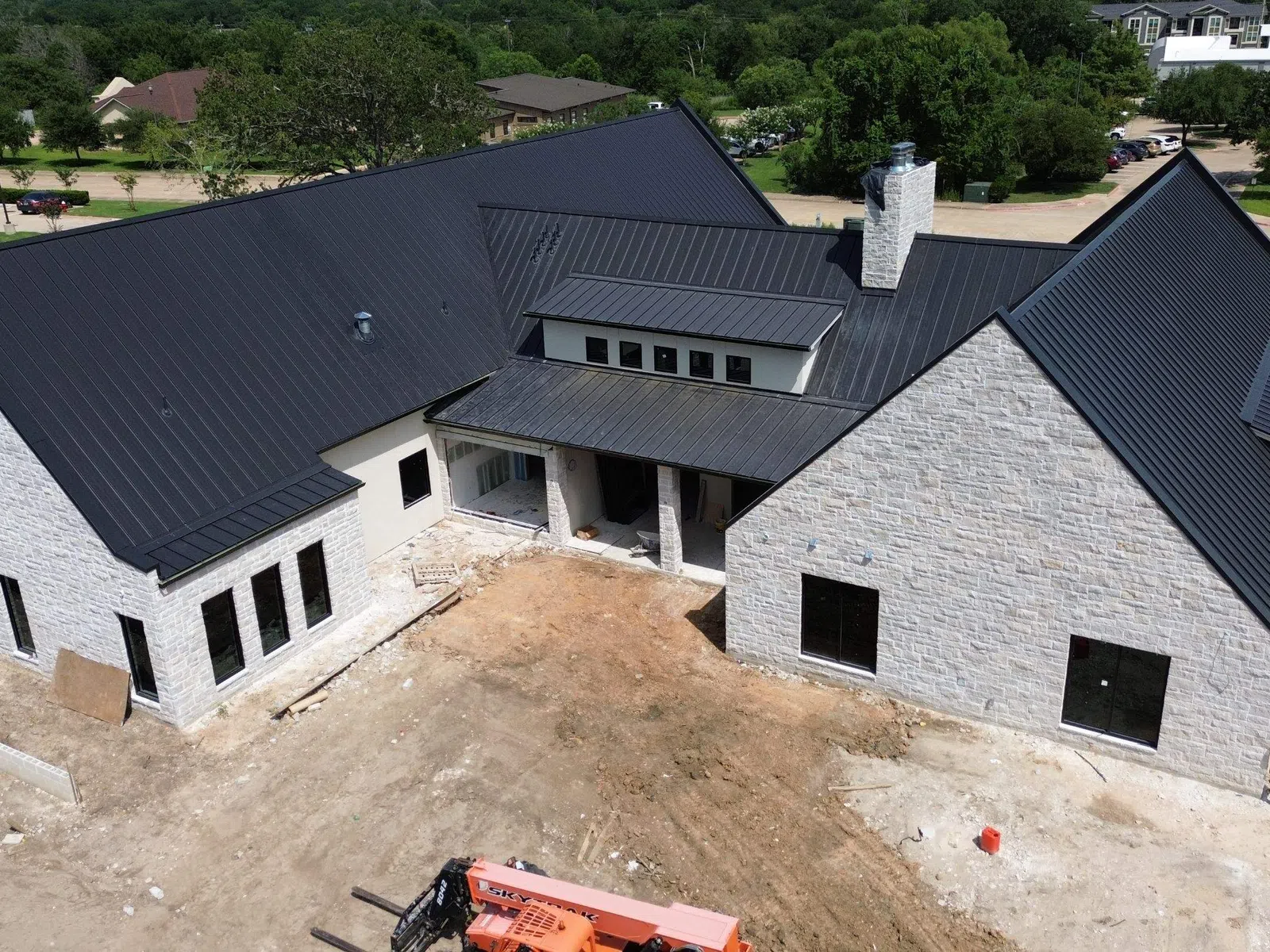
Standing seam metal is a premium steep slope system defined by raised vertical seams that interlock to conceal the fasteners. It is one of the longest-lasting and lowest-maintenance roofing options available for commercial and institutional buildings.
- Materials Used: Standing seam panels are most often formed from steel or aluminum, finished with a factory-applied coating such as Kynar 500 for color retention and corrosion resistance. Panel widths, seam heights, and gauges are selected based on the building's slope, span, and wind exposure.
- Installation: Panels run vertically from ridge to eave and are joined by seams that are mechanically locked or snapped together. Because the fasteners are hidden beneath the seams, they are protected from weather and UV exposure. The system allows the metal to expand and contract with temperature changes without compromising the watertight seal.
- Benefits: Standing seam metal delivers exceptional longevity, commonly lasting 40 to 70 years with minimal maintenance. It sheds water and debris efficiently, resists fire and high winds, and reflective coatings can significantly reduce cooling costs in the Texas climate. It is also fully recyclable at the end of its service life.
- Considerations: Standing seam carries a higher upfront cost than shingle systems. Installation requires specialized tools and experienced crews, so contractor selection is critical. Panels can be susceptible to oil-canning, a cosmetic waviness in flat areas, and repairs require metal-specific expertise rather than general roofing labor.
Shake
(Wood Shake and Shingle)
Wood shake is a traditional steep slope material valued for its natural, textured appearance. It is chosen primarily for architectural character on properties where a distinctive, high-end look is the priority.
- Materials Used: Shakes are split or sawn from natural wood, most commonly western red cedar, which contains natural oils that resist decay and insects. Shakes are thicker and more rugged than sawn wood shingles, giving the roof a deep, dimensional texture. Products are available in various grades and can be treated for improved fire and rot resistance.
- Installation: Wood shakes are installed over a breathable underlayment, often with spaced sheathing or a batten system that allows air to circulate beneath the shakes and keep them dry. Each shake is individually fastened, and proper overlap and exposure are essential to shed water correctly. Skilled installation is critical because the material is less forgiving than manufactured products.
- Benefits: Shake roofs offer a natural beauty and architectural warmth that manufactured materials cannot fully replicate. Cedar provides natural insulation value, and a well-maintained shake roof can last 30 years or more. For properties where appearance and character are the priority, shake delivers a distinctive result.
- Considerations: Wood shake requires the most maintenance of any steep slope system, including periodic cleaning, treatment, and replacement of damaged shakes. Without fire-retardant treatment it carries a higher fire risk, and some jurisdictions restrict its use. Cost is high, and performance depends heavily on climate, maintenance, and installation quality.
Tile
(Clay and Concrete)
Tile is among the most durable and longest-lasting roofing materials available, offering a distinctive architectural profile and exceptional resistance to the elements. It is a common choice for institutional and Mediterranean or Spanish-style commercial buildings.
- Materials Used: Roofing tile is manufactured from either natural clay fired at high temperatures or molded concrete. Both are available in a range of profiles, from traditional barrel and mission tiles to flat and interlocking styles. Tile is naturally fire resistant and holds its color well over decades of sun exposure.
- Installation: Tile is heavy, so the building's structure must be engineered or verified to carry the load before installation. Tiles are installed over a robust underlayment, often with battens, and are either nailed or clipped into place. Detailing at hips, valleys, and penetrations requires specialized expertise to maintain the waterproof layer beneath the tile.
- Benefits: Tile roofs are extraordinarily durable, frequently lasting 50 years or more, and clay tile in particular can exceed a century of service. Tile is fire resistant, impervious to rot and insects, and performs well against wind and impact. Its thermal mass helps moderate building temperatures, and its appearance is a defining architectural feature.
- Considerations: The weight of tile is the primary consideration, often requiring additional structural support that adds to cost. Upfront material and installation costs are among the highest of any roofing system. Individual tiles can crack under heavy impact or foot traffic, and repairs require matching the original profile and color.